
Why Traditional Print Management Systems Are Outdated Without AI
January 6, 2026
When was the last time you evaluated your print management system? If you are still relying on traditional print workflows, you might be missing out on massive cost savings, operational efficiency and sustainability advantages that AI in print management can deliver.
In the digital era, customers expect faster turnaround times, error-free quotes, real-time tracking and data-driven insights.
However, traditional systems, once revolutionary, now struggle to keep up. They lack automation, predictive analytics and adaptive learning capabilities.
According to a recent Deloitte report, organizations using AI see a 30% reduction in operational costs and a 40% improvement in process efficiency, including in the printing and manufacturing industries.
For modern print businesses using platforms like PrintPLANR, integrating AI in the printing landscape is a necessity.
Let’s explore why AI has become the new backbone of intelligent print management solutions and why traditional systems are quickly becoming obsolete.
A traditional print management system typically helps handle print orders, quotations, inventory, job tracking and customer communication.
But these systems were designed for static workflows and predictable customer demands.
In contrast, today’s printing businesses operate in a dynamic environment—requiring real-time adaptability and automation.
Here’s where traditional systems fall short:
Legacy systems depend heavily on manual data entry, whether it is generating quotes, tracking materials, or updating job statuses. This creates room for costly human errors.
Traditional print management software doesn’t analyze data for insights. It tells you what happened, not what could happen next. This limits proactive decision-making.
Without AI print workflow optimization, most repetitive tasks, like job scheduling, reordering materials, or approving quotes require manual intervention, slowing down the production cycle.
As print businesses expand, traditional systems fail to handle higher order volumes, multi-location management or custom workflows.
Older print management solutions rarely integrate smoothly with CRM, ERP, or accounting systems, causing data silos and inconsistent communication across departments.
These inefficiencies can directly impact profitability.
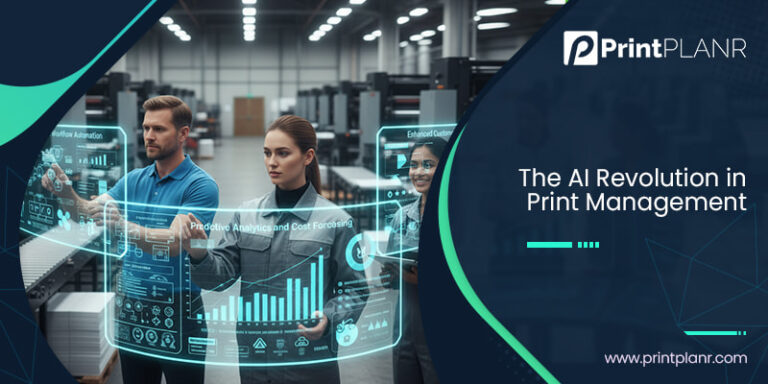
AI in print management has transformed how printers approach workflow, cost control, and customer experience.
By integrating artificial intelligence into their operations, print businesses gain the ability to automate, predict and optimize every stage of the printing lifecycle.
Imagine a scenario where your print management software automatically prioritizes jobs, allocates resources, and predicts machine maintenance, all without human involvement. That’s what AI print workflow optimization makes possible.
AI-powered systems analyze print job patterns and customer behavior to suggest the most efficient workflow routes. For example, PrintPLANR uses smart automation modules to streamline repetitive operations, such as job costing, proof approvals and delivery scheduling, saving valuable time and reducing labor costs.
AI in the printing industry enables predictive analytics to forecast job completion times, estimate resource requirements and even identify potential equipment failures before they happen.
With AI in print management, managers can view data-driven dashboards that help predict future demand, enabling smarter purchasing and inventory planning.
According to McKinsey, predictive analytics powered by AI can cut production waste by up to 20%, directly improving profitability and sustainability.
Customers now expect transparency and real-time communication. AI-enhanced print management solutions provide automated notifications, instant quoting, and personalized recommendations based on customer history.
PrintPLANR’s cloud-based system, for instance, integrates AI print workflow optimization that allows businesses to deliver faster responses and better pricing accuracy. This builds stronger customer relationships and repeat business.
Transitioning from systems to AI-enabled print management software is more than a technology upgrade, it is a strategic business decision.
Here are the top reasons businesses are making the shift:
AI-integrated dashboards provide real-time visibility into every stage of production from job creation to delivery. This eliminates communication gaps and ensures accountability.
AI doesn’t just store data; it interprets it. With AI print workflow optimization, businesses can make informed decisions on pricing, capacity planning, and marketing strategies.
AI-powered automation minimizes manual input errors and ensures consistent job quality across multiple locations.
Platforms like PrintPLANR offer flexible, cloud-based print management solutions that can scale effortlessly with business growth, whether you’re managing 100 jobs or 10,000.
In a competitive printing market, faster turnaround times and superior accuracy can make or break client relationships. AI-powered print systems deliver both—helping businesses stay ahead.
These results clearly demonstrate how AI in print management is not just an upgrade, it is a complete transformation in operational strategy.
These inefficiencies can directly impact profitability.
The future of print workflow management is undeniably intelligent, data-driven, and connected. AI-enabled systems will soon:
As more printing firms adopting AI in the printing ecosystem, those relying on traditional setups risk falling behind in efficiency, profitability, and customer satisfaction.
Traditional print management systems have served the industry well but the world has moved on. Businesses today require intelligent automation, predictive insight, and real-time adaptability that only AI in print management can offer.
PrintPLANR represents this new era, where AI print workflow optimization turns reactive operations into proactive, data-driven systems.
From managed print services to end-to-end print workflow management, AI is redefining how print companies operate and grow.
If your print business still depends on manual or traditional processes, it’s time to ask yourself: Can my current system keep up with tomorrow’s printing demands?
The answer is clear, without AI-powered print management solutions, you’re not just losing efficiency; you’re losing opportunity.
PrintPLANR offers a comprehensive, customizable MIS platform tailored specifically for the print industry—helping you automate from quote to invoice with ease.
Schedule your free demo today and explore how PrintPLANR can transform your print operations from fragmented to fully connected.
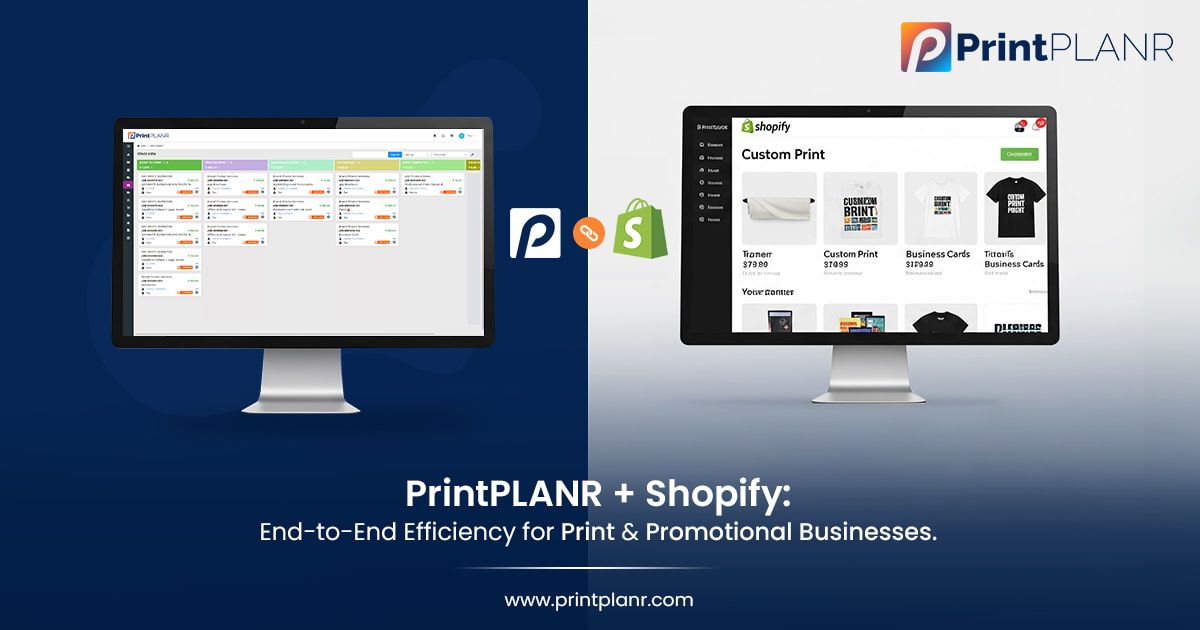
Book your free demo today and experience how our AI-powered automation platform helps print businesses enhance efficiency, accuracy, and profit margins.
See PrintPLANR in Action